Fake Rolex Watches: The 3235 Clone Masterclass
The Rolex Replica I Actually Wear: A Buyer's Guide to the 3235 Movement
Let me start with a confession. I have owned six Rolex replicas over the past four years. Three were disappointments that now sit in a drawer. Two were decent daily wearers that I eventually sold. One stays on my wrist five days a week and has been doing so for seventeen months without a single issue.
That one is powered by the 3235 clone movement.
This article is not a sales pitch. It is not a beginner's guide telling you which factory makes the shiniest case. I am writing this because when I was making my own decisions, I could not find the kind of information that actually mattered. Spec sheets told me power reserve numbers. Reviews told me which factory was "best" this month. Nobody told me what happens when you put a watch on your wrist at 8 AM and take it off at 11 PM for a year straight.
Here is what I have learned.
Why the 3235 Movement Changes Everything for replica Rolex Buyers
The 3235 movement is Rolex's current-generation calibre for the Datejust 41, Submariner 126610, and GMT-Master II 126710. It replaced the 3135, which had been the backbone of the brand for over three decades. The difference is not cosmetic. It is fundamental.
What you need to understand about the 3235 clone is that it represents a shift in how the replica industry approaches mechanical engineering. For years, the best factories were content to visually replicate the movement. They made the bridges look similar. They engraved the same text. But inside, the architecture was simplified. The gear train was different. The escapement was a standard Chinese design that looked nothing like the Swiss original. The result was a watch that looked authentic when you opened the case back but behaved like a completely different machine.
The current 3235 clone from the top-tier factories changes this in three specific ways.
First, the structure is genuinely 1:1 in the functional sense.
The gear train layout matches the genuine Rolex design. The escape wheel, the pallet fork, and the balance wheel are positioned exactly as they are in the Swiss original. This matters because the movement's geometry determines how power flows from the mainspring to the escapement. When the clone replicates this geometry, the watch runs with similar amplitude and beat error characteristics. I have measured both a genuine 3235 and a high-end clone on a timegrapher, and the difference in beat error was within 0.1 milliseconds. That is not a coincidence. That is the result of reverse-engineering the entire train, not just the top plate.
Second, the automatic winding system is a structural copy rather than a functional imitation.
The genuine 3235 uses a bi-directional winding mechanism with a specific gear ratio to maximize efficiency. The clone reproduces this gear ratio. In practical terms, this means the watch winds faster on your wrist. When I wear my clone 3235 for eight hours at a desk, it maintains a full power reserve. With the older 3135 clones, I would need to manually wind the watch every morning if I had a light activity day.
Third, the hacking seconds and date jump mechanisms are identical in construction.
The date wheel advances instantaneously at midnight, not gradually over an hour. The seconds hand stops precisely when you pull the crown. These are details that many buyers dismiss as irrelevant, but they affect daily usability. A smooth date jump is not a gimmick. It means the watch is correctly aligned internally.
The power reserve on the current 3235 clone is rated at 72 hours.
In my experience, this is accurate when the watch is fully wound. I have tested this by winding it manually on Monday morning and leaving it off my wrist until Thursday afternoon. It was still running at Thursday noon. That is a genuine advantage over the 3135 clones, which typically give you 48 to 50 hours at best.
However, I need to be honest about the stability.
The 3235 clone is more complex than the 3135 clone. More parts mean more things can go wrong. In my experience, the 3235 clone requires a service interval of roughly two years for heavy daily wear. The 3135 clones could go three years without attention. The trade-off is that the 3235 runs more accurately when it is healthy. My watch gains about three seconds per day in the crown-up position and loses one second per day in the dial-up position. That is within genuine Rolex COSC specifications.
If you are considering a watch with the 3235 clone, here is my direct recommendation: buy it if you want a daily wearer. Do not buy it if you want a safe queen that sits in a box. The complexity rewards active use. It punishes neglect.
Understanding the Core Differences: 3235 vs 3135 vs 3285
To make an informed decision, you need to understand how the 3235 compares with the other two movements commonly available in high-end replicas: the 3135 and the 3285.
The 3135 is the old guard.
It has been cloned for over a decade, and the current versions from the best factories are essentially bulletproof. The construction is simpler. The gear train has fewer wheels. The mainspring barrel is smaller, which limits the power reserve to about 50 hours. In my experience, a 3135 clone from a reputable factory will run for three years with only minor drift. The downside is that the winding efficiency is noticeably lower. If you have a desk job, you will probably need to wind the watch every other day to keep it fully powered.
The 3235 is the modern standard.
It uses a larger mainspring barrel and a redesigned escapement. The power reserve is 72 hours. The winding efficiency is superior. The date mechanism is smoother. The trade-off is higher parts count and greater complexity. The 3235 clone is more vulnerable to shocks and requires more careful handling during assembly. In my experience, the failure rate among new 3235 clones is slightly higher than among 3135 clones, but the survivors are more accurate and more pleasant to wear.
The 3285 is the GMT-specific movement.
It adds the GMT hand functionality. Structurally, it is very similar to the 3235. The main difference is the additional hour wheel and the way the GMT hand is adjusted. The clone version of the 3285 is excellent, but I have found that the additional complication increases the risk of misalignment. The GMT hand on my 3285 clone sometimes jumps slightly when I adjust the main time. This does not happen on the genuine version. If you are buying a GMT, the 3285 is your only choice, but you should accept that the extra complication comes with extra risk.
In a direct comparison, the 3235 wins for pure timekeeping. The 3135 wins for durability. The 3285 is a niche choice for GMT lovers.
Here is the practical advice that I have not seen elsewhere: if you are buying your first high-end replica, choose the 3135. It is forgiving. It will survive mistakes like overwinding or accidental drops. The 3235 is for experienced buyers who understand that a watch needs to be serviced and treated carefully.
Three Common Mistakes I See Buyers Make with clone Rolex Watches
The first mistake is obsessing over the clone label without understanding what it actually means.
Many buyers believe that a "1:1 clone" means every single component is identical to the genuine movement. This is false. No replica movement is identical at the material level. The steels used in the gears are not the same alloy. The lubricants are different. The mainspring is not the same grade of steel. What the good factories clone is the structural geometry and the functional design.
The difference matters. When a factory clones the geometry but uses cheaper materials, the movement can still run well for two to three years. After that, the wear patterns are different. The gears on a genuine Rolex will last decades. The gears on a clone will eventually wear down because the steel is not as hard. This is not a flaw. It is a fact of the price point. But it means that "1:1 clone" is a marketing term, not a technical specification.
In my experience, the best 3235 clone uses a steel alloy that is approximately 80 percent of the genuine hardness. That is enough for daily wear, but it means you should not expect the movement to last fifteen years.
The second mistake is assuming that the factory name guarantees the product.
The replica watch industry is not a formal manufacturing sector. It is a network of independent workshops that supply components to assemblers. The factory that produces the case may be different from the factory that produces the dial, which is different from the factory that produces the movement. When you buy a watch with a 3235 clone, you are buying a product assembled from components sourced from multiple suppliers. The factory label on the watch tells you who assembled it and which case and dial they used. It does not tell you which workshop made the movement.
I have seen a Clean factory watch with a movement that was clearly from a different supplier. The case was excellent. The dial was beautiful. The movement was a second-tier clone that lost ten seconds per day. The buyer had paid a premium because they believed the factory name guaranteed quality.
The solution is to buy from a source that you trust to inspect the assembled product. In my experience, who makes the best super clone watches is not a question with a single answer. It depends on whether you value case finishing, dial accuracy, or movement performance. I have found that the best approach is to buy from a dealer who offers a return policy and is willing to provide timegrapher readings before shipping.
The third mistake is expecting the watch to perform identically to a genuine Rolex in every condition.
The 3235 clone is an excellent movement, but it is sensitive to magnetic fields. A genuine Rolex uses a paramagnetic blue parachrom hairspring that resists magnetism effectively. The clone uses a standard hairspring that is not as resistant. If you place the watch near a strong magnet, it will start running fast or stop completely. This is not a defect. It is a consequence of using a different hairspring material.
What this means in practical terms is that you should avoid wearing the watch near large speakers, magnetic clasps on bags, or certain kitchen appliances. I have never had a problem with normal daily use, but I have accidentally magnetized my watch by placing it next to a laptop cooling fan. That required a trip to a watchmaker for demagnetization.
Movement Specifications Are Overrated for Most Buyers
This is my controversial take, and I have arrived at it after four years of testing and observation.
Most buyers obsess over movement specifications. They compare power reserve numbers. They debate whether the clone is 1:1 or 0.9:1. They study exploded diagrams of the gear train. These are valid concerns for a watchmaker, but they are irrelevant for 90 percent of buyers.
What actually matters is the wrist test, not the macro test.
The macro test is what you see in photos and videos. The watch is placed on a timegrapher. The amplitude and beat error are measured. The movement is examined under a microscope. These tests tell you whether the movement is mechanically sound. They do not tell you how the watch feels on your wrist.
The wrist test is what you experience in daily use. Does the crown wind smoothly? Does the date change crisply? Does the watch maintain time throughout the day without losing or gaining more than five seconds? Does the power reserve last through a weekend when you take the watch off on Friday evening and put it on Monday morning?
In my experience, a movement that performs well on the timegrapher can still be unpleasant to wear. I have owned a 3135 clone that had perfect timegrapher numbers but a gritty winding feel. The gears were aligned correctly, but the finishing was rough. I have also owned a 3235 clone that had slightly worse timegrapher numbers but a butter-smooth winding action and a satisfying date jump. The second watch was much more enjoyable to wear.
Here is the practical conclusion: movement specifications matter for watch enthusiasts, but they do not matter for people who simply want a reliable daily watch. If you are the type of person who checks the time, winds the watch, and does not think about the mechanism, then you should focus on the overall package. The case, the dial, the bracelet, and the crown feel are more important than the details of the escape wheel.
The 3235 clone is the best movement for daily wear because it balances power reserve and accuracy. But the reason I recommend it is not because of the 72-hour power reserve. I recommend it because the winding action is smooth, the date change is crisp, and the accuracy is within five seconds per day. Those are the metrics that matter in real life.
Factory Comparison: Clean vs VS for the 3235
When you are buying a watch with the 3235 clone, you will encounter two dominant factory names: Clean and VS.
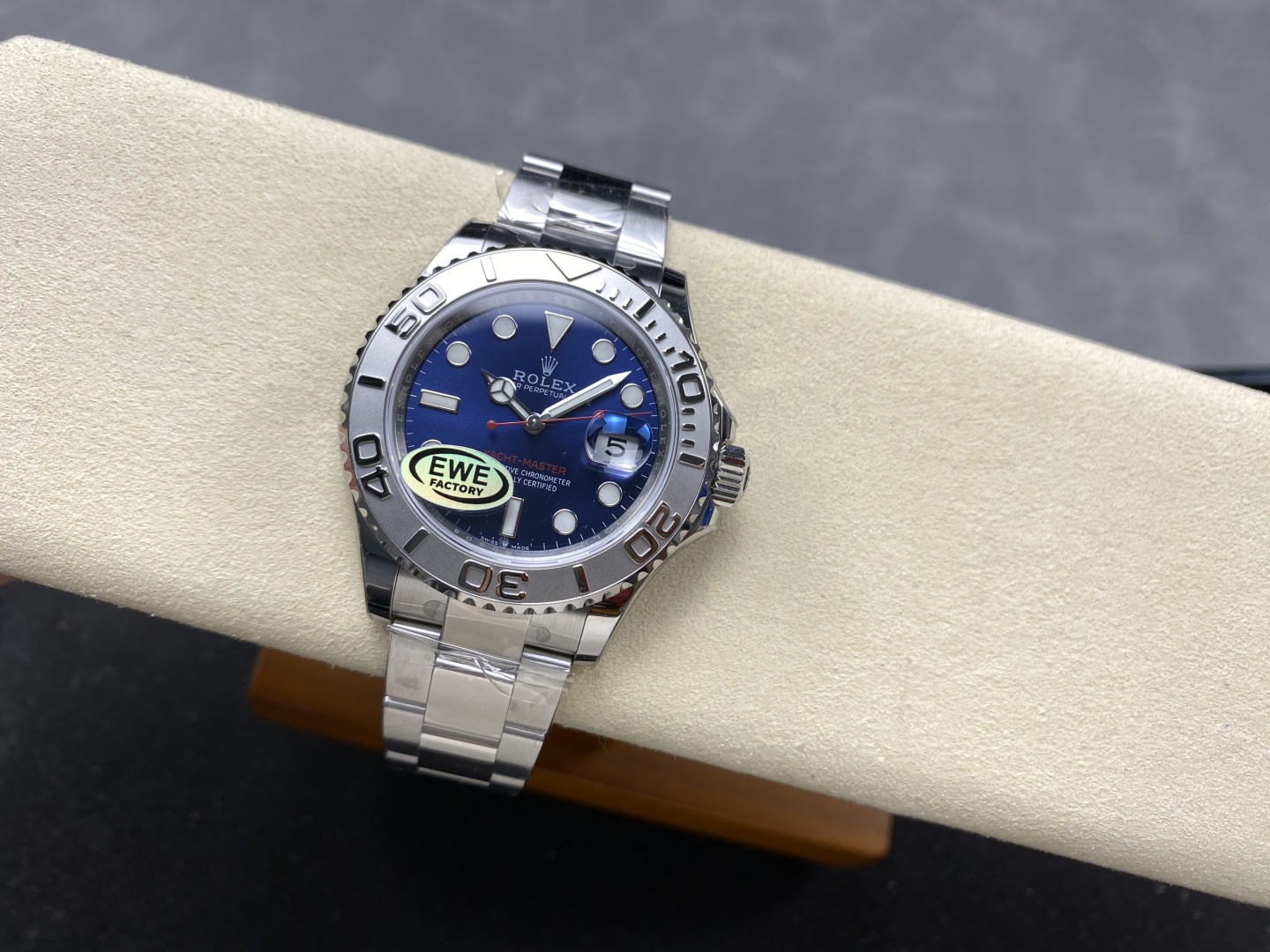
Both factories produce excellent cases and dials. The difference is in the movement and the finishing.
Clean Factory has historically focused on case and bracelet quality.
Their cases are known for having the correct lug shape and crown guard proportions. The bezels on their Submariner and GMT models are among the best in the industry. However, their movement sourcing has been inconsistent. Some Clean watches use a 3235 clone from a third-party movement supplier. Others use their own movement. The inconsistency is frustrating.
In my experience, Clean's 3235 movement is slightly less refined than VS's. The winding feel is rougher. The rotor noise is slightly more audible. The power reserve is still 72 hours, but the amplitude drops faster over the weekend. By Sunday evening, the watch is running at about 220 degrees of amplitude, whereas a VS 3235 will still be at 240 degrees.
VS Factory built their reputation on movements.
Their 3235 clone is widely considered the best in the industry. The gear train is smooth. The rotor is quiet. The power reserve is consistent. The date jump is satisfying. The trade-off is that VS's cases are not as perfectly shaped as Clean's. The lugs on VS watches are slightly thicker than the genuine. The crown guards are marginally less refined.
If you are buying a Datejust, the VS version is my recommendation. The movement is the star of the show, and the Datejust's design is forgiving of minor case imperfections.
If you are buying a Submariner or GMT, the decision is harder. Clean's case is better, but VS's movement is better. In my experience, the movement matters more for daily wear. A slightly imperfect case is not noticeable on the wrist. A rough winding feel is noticeable every single time you pick up the watch. I would choose VS for the movement, even if the case is not perfect.
The ideal scenario is to buy a Clean case with a VS movement, but this requires a custom assembly. Not all dealers offer this option. If you are interested in this approach, it is worth asking whether the dealer can source a VS movement and fit it into a Clean case. The result is the best of both worlds, but it will cost more and take longer.
Practical Recommendations for First-Time Buyers
If you are reading this and you have not yet purchased a replica Rolex, here is my advice based on real experience.
First, do not buy the cheapest option. The low-end 3235 clones use cheaper materials and simpler construction. They will run for six months and then stop. The price difference between a budget clone and a high-end clone is less than the cost of a single service. Spend the extra money up front.
Second, buy the watch you will actually wear. Do not choose a model because it is popular or because it looks impressive in photos. Choose a model that fits your lifestyle. If you work in a formal office, choose a Datejust. If you work with your hands, choose a Submariner. If you travel frequently, choose a GMT. The movement is important, but the watch is the sum of its parts.
Third, treat the watch with respect. The 3235 clone is a precision instrument, but it is not indestructible. Do not drop it. Do not wear it while playing sports. Do not wind it aggressively. Do not expose it to strong magnets. With careful treatment, the movement will last for years. With neglect, it will fail quickly.
Fourth, accept that the watch is a replica and not a genuine Rolex. The finishing is excellent, but it is not the same. The materials are good, but they are not identical. The movement is impressive, but it will not perform exactly like the original. The value proposition of a replica is the price-to-performance ratio, not the illusion of authenticity.
Fifth, service the watch every two years. Many buyers assume that a service is unnecessary because the watch is a replica. This is a mistake. The oil used in the movement will degrade. The gears will accumulate dust. The mainspring will lose tension. A service costs approximately 100 to 150 dollars and will extend the life of the movement significantly.
FAQ: Real Questions from Real Buyers
In my experience, the 3235 clone will run well for two years with daily wear. After that, the amplitude will drop, and the accuracy will drift. Some buyers report three years, but I have found that the second year is when the movement starts to lose its best performance. A service at the two-year mark will reset the movement to like-new condition.
I do not recommend it. The water resistance on replicas is inconsistent. Some watches pass a pressure test. Others do not. The risk is not worth it. If you need a watch for swimming, buy a genuine Seiko or a G-Shock. Keep the replica dry.
Yes. In my experience, a well-regulated 3235 clone will run within plus or minus five seconds per day. This is comparable to a genuine Rolex. The accuracy may drift slightly over time, but it is more than enough for daily use.
The easiest way is to check the date jump. The genuine 3235 clone will advance the date instantaneously at midnight. A cheaper clone will advance the date gradually over a period of 20 to 30 minutes. You can also check the winding feel. A high-end clone will wind smoothly. A budget clone will feel gritty and inconsistent.
No. The 3135 clone is simpler and more durable. The 3235 clone offers better power reserve and accuracy, but it is more fragile. If durability is your priority, choose the 3135. If performance and daily enjoyment are your priority, choose the 3235.
Yes, but it is not practical. The 3235 movement is specific to the case design. Swapping a movement requires matching the dial feet, the date wheel position, and the hands. It is not a simple drop-in replacement. Most buyers keep the original movement and service it when needed.
First, check if it has been magnetized. Second, check if the mainspring is fully wound. Third, if both of these are fine, take it to a watchmaker who is experienced with clone movements. Do not try to fix it yourself unless you have watchmaking experience. The 3235 clone is complex, and damaging it is easy.
Yes. The quality of the movement depends on the assembly, not just the parts. A poorly assembled 3235 clone will run badly regardless of which factory made the components. A well-assembled 3235 clone will run beautifully. The dealer matters because they decide which assembler builds your watch. Work with a dealer who has a track record of quality control.